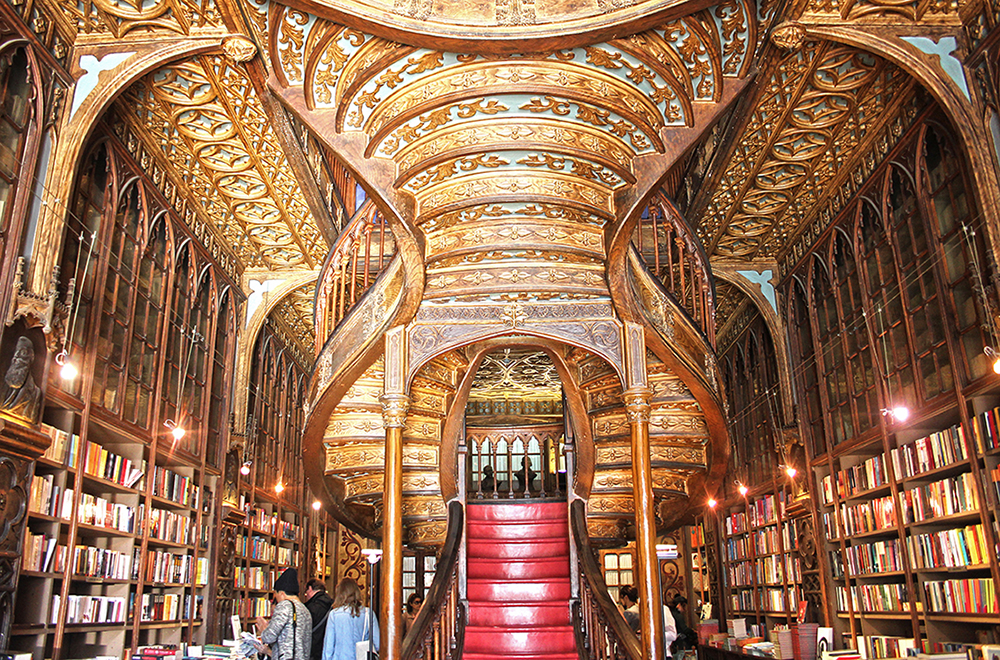
If you’ve ever stood in a bookshop in June, paralysed in front of a table labelled “Best of the Year So Far,” here’s a small consolation: the paralysis isn’t a flaw in you. It’s a feature of the question. “Best” is not a property a book carries around on its own—it’s a judgement rendered by a particular reader, at a particular moment, with a particular stack of unread books glaring at them from the bedside table.
And yet. Every June, something genuinely useful happens. The big tastemakers—The New York Times, The New Yorker, Esquire, the BBC, Vogue, the booksellers—all publish their mid-year lists within weeks of each other, each compiled independently, each with its own biases and blind spots. Read any one of them and you get an opinion. Read all of them side by side and you get something better: a consensus. The titles that survive on every list, despite all those competing tastes, are telling you something real.
So that’s the method here. Not “the best books of 2026,” exactly—rather, the books of 2026 that the most people whose job is reading can’t stop agreeing about.
The Heavyweights: Familiar Names in Top Form
Start with the novelists you already know, because 2026 has been unusually generous with them.
The loudest applause so far belongs to Douglas Stuart, the Booker winner behind Shuggie Bain, whose new novel John of John trades Glasgow for the remote Scottish Hebrides and has landed on practically every list published this spring. Close behind is Tayari Jones—the An American Marriage author—whose Kin follows two lifelong friends pulled back into each other’s orbits by tragedy, and which critics have praised for its wit and emotional depth.
The Irish-interest pick of the year is Maggie O’Farrell’s Land, her first big swing since Hamnet, set in nineteenth-century Ireland. Ann Patchett is back too, with Whistler, a quiet, character-driven novel about unexpected connection—exactly the sort of thing Patchett has spent a career making look effortless. And the literary-insider favourite is This Is Where the Serpent Lives by Daniyal Mueenuddin, one of the rare titles to make both the Times and New Yorker cuts—a useful signal, since those two lists agree less often than you’d think.
For readers who like their fiction in translation, the recurring name is Marie NDiaye, whose The Witch (translated by Jordan Stump) has been the standout pick from the smaller presses.
The Surprises: Debuts and Reinventions
Every publishing year has a debut that arrives with a thunderclap, and 2026’s is Yesteryear by Caro Claire Burke: a darkly funny novel about a lifestyle influencer who wakes up in what appears to be another century—no electricity, strange children, a husband who has inexplicably become a competent farmer—and has to work out whether she’s on a reality show, in a time slip, or being tested by something worse. It’s been described as a gimlet-eyed satire of tradition, fame, faith, and the performance of womanhood, and it’s been everywhere, including the BBC’s and Barnes & Noble’s mid-year lists.
Then there are the reinventions. Jennette McCurdy, whose memoir I’m Glad My Mom Died became a publishing phenomenon, has made her fiction debut with Half His Age. Lena Dunham’s Famesick has been one of the most talked-about—and argued-about—books of the spring. And T Kira Madden’s Whidbey is the year’s critical favourite in the literary-thriller lane.
And finally, the bidding-war book: Imani Thompson’s debut Honey, the one ten publishers reportedly brawled over. Early word suggests they were right to.
The Nonfiction Shelf
If the fiction lists reward invention, the nonfiction lists this year reward depth.
The marquee title is London Falling by Patrick Radden Keefe, the Empire of Pain and Say Nothing author whose every book now arrives as an event. The critics’ darling, meanwhile, is Namwali Serpell’s On Morrison—a book of literary criticism, of all things, which almost never breaks into general best-of lists, except that this one is about Toni Morrison and Serpell is, by all accounts, extraordinary on her.
Memoir has had a loud spring too. Belle Burden’s Strangers: A Memoir of Marriage—an unflinching account of a great love that ended as abruptly as it began—has dominated both the lists and the discourse, alongside Lindy West’s Adult Braces. And for readers who like their nonfiction with a longer view, the biography of the year so far is Richard Holmes’s Young Tennyson, a portrait of the poet as a magnetic, mercurial young man wrestling with the great scientific questions of his age.
The Twist: A “Best of the Year So Far” List Is a Strange Machine
Here’s where it’s worth slowing down. A mid-year list is not a smaller version of a year-end list—it’s a different instrument entirely.
For one thing, it can only see half the sky. Publishers famously hold many of their biggest guns for autumn, when prize season and holiday shopping collide, so a June list is ranking the year’s first act against an invisible second one. For another, these lists are partly a feedback loop: a book that lands on one list becomes likelier to be read, discussed, and listed again, which is part of why the same dozen titles echo across publications. Consensus is informative—but it’s also, a little bit, self-assembling.
And none of the lists agree completely. The fun, honestly, is in the disagreements: the under-the-radar indie picks that only one publication champions are often where the real discoveries live.
A Necessary Asterisk
So treat everything above the way you’d treat the season’s weather forecast: a very good guide, not a verdict. The Booker longlist, the National Book Awards, and the great autumn releases are all still to come, and by December some of these titles will look prophetic while others quietly vanish from the conversation. That’s not a failure of the lists. It’s just what happens when you ask “what’s best?” at half-time.
The Takeaway: The Best Book of 2026 Is the One You’ll Actually Finish
The honest answer to “what’s the best book of 2026 so far?” is a question in return: best for whom? If you want the consensus literary heavyweight, it’s John of John. If you want the debut everyone will be arguing about at dinner, it’s Yesteryear. If you want nonfiction that reads like a thriller, it’s London Falling; if you want the year’s great memoir, it’s Strangers.
But notice what the lists really tell you: in a single half-year, publishing produced a Hebridean epic, a time-slip influencer satire, a meditation on Toni Morrison, and a teen star’s reinvention as a novelist—and serious readers loved all of them. The best book of 2026 isn’t hiding on a league table. It’s whichever of these is closest to where you, the reader, happen to be standing.