In her new dystopian novel “Automation”, Stephanie Paich conjures a vision of the future that feels unnervingly plausible, a world where individual agency has surrendered to automation and self-driving transportation pods have reshaped modern life. Told through the eyes of 26-year-old Thomas, who has never known a world before “the change,” this thought-provoking book explores the implications of a society that no longer drives itself, literally or metaphorically.
The story pivots on a moment of disruption in a seemingly perfect world. Thomas, a risk-averse young man raised in the security of automated transport pods, visits his grandfather—a vocal critic of modernity—for his 80th birthday. On this same day, as the nation celebrates fifty years of the automated transport system, the unthinkable happens: a pod malfunctions catastrophically. Thomas witnesses Analise, a young mother, barely escape with her infant child, and his instinctive decision to help forms an unexpected connection that becomes the emotional anchor of the story. As their relationship deepens from chance encounter to something more, Thomas questions a society engineered to eliminate uncertainty at all costs.
What makes “Automation” especially timely is the ethical questions it raises in this era where AI and self-driving cars are such hot topics. Thomas is not a rebel or a saviour; he’s an ordinary man trying to reconcile the convenience of the world he’s inherited with the slow-burning doubt that something essential has been lost. His grandfather’s disdain for “purified air” is not eccentricity—it’s a cri de coeur. Through him, the book makes its most elegant argument: that the cost of absolute safety may be the erosion of something just as important.
The prose is accessible and simple to its benefit, alternating between humour and moments of gripping tension. Dialogue feels organic, never over-stylised, and Paich is careful not to excessively impose judgment on the world she’s built. Rather, the tension lies in the silences, what’s left unsaid and what is subtly mourned. When Thomas begins walking to the festival instead of calling a pod, the moment is small but powerful.
While the technology at the centre of “Automation” is conceived with imagination—pods, tracking systems, emergency override functions, phased-out features—the real power of the book lies in its characters. Analise, recovering from her injuries and navigating single motherhood after her husband’s death, becomes a counterpoint to Thomas: someone for whom the system failed. Together, they find connection on the brittle foundation beneath their society’s supposed progress.
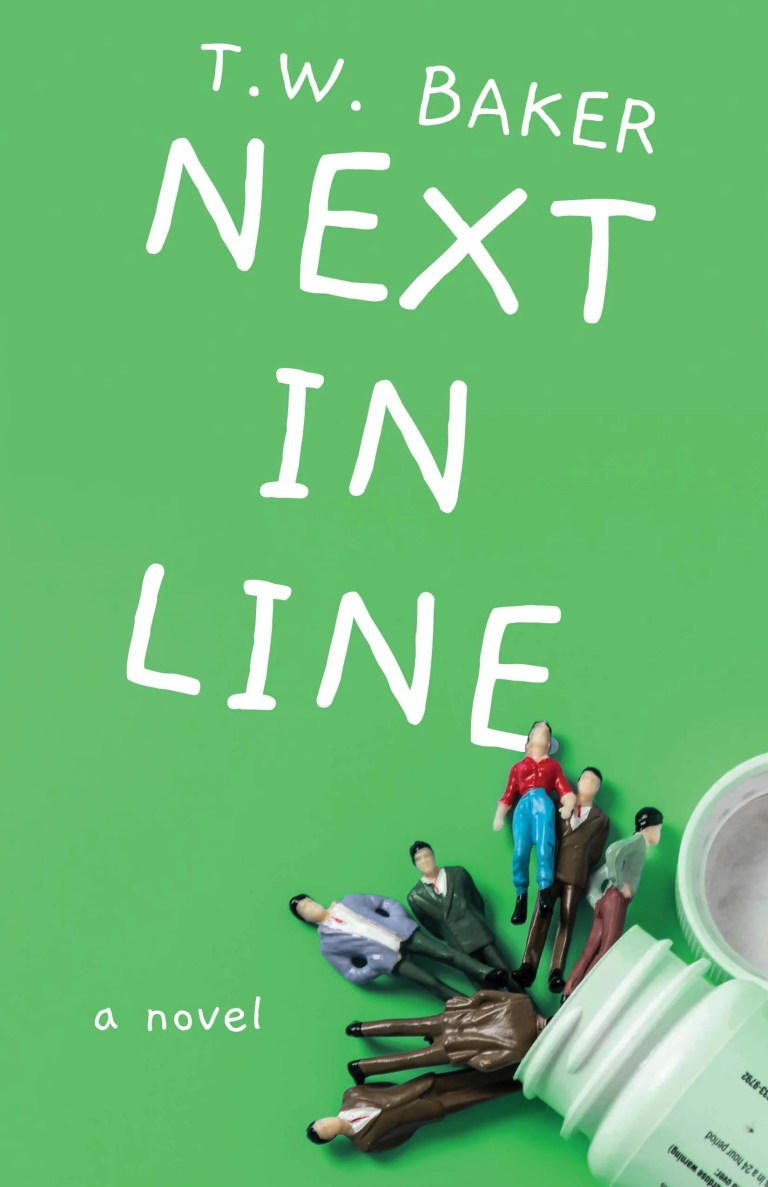
The book, however, is not without its flaws. While it may not be the role of a book review to linger on cover design, future novels by Paich might benefit from a more distinctive and imaginative visual presentation—something that more fully reflects the originality of her storytelling. There are also a few minor errors and writing issues present, though they do little to diminish the novel’s overall impact.
To sum up, “Automation” is a gripping novel that asks deep questions about the future. It asks: what does progress mean when it erases struggle? Can a system built to eliminate danger also sterilise joy? And perhaps most thought-provokingly, what happens when safety becomes the only virtue? For readers who enjoy gripping dystopias with fully-realised characters—think Ishiguro’s Never Let Me Go, The Giver or Ray Bradbury at his gentlest—”Automation” offers a story that is well worth a read. This is a story that doesn’t explode but seeps in, forming a gripping cautionary tale.
You can get your copy of “Automation” by Stephanie Paich here!